
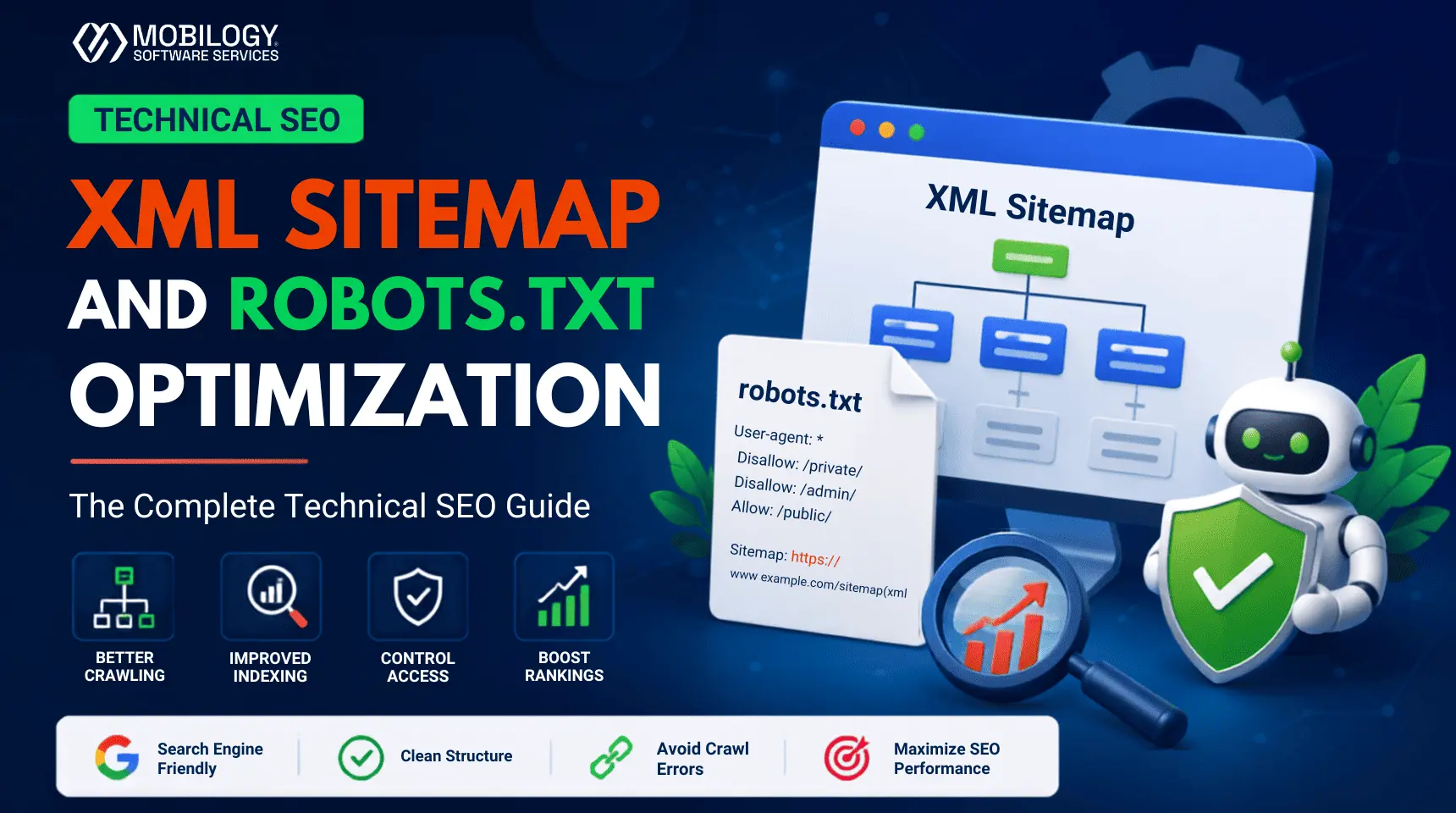
Technical SEO plays a crucial role in improving website visibility, search engine crawling, and organic rankings. While many businesses focus on content marketing, backlinks, and keyword optimization, essential technical elements like an XML Sitemap and Robots.txt file often decide how efficiently search engines discover and understand a website.
A properly optimized XML Sitemap and Robots.txt configuration helps search engines like Google crawl important pages, avoid unnecessary resources, and improve overall website performance. For businesses competing in today’s digital landscape, technical SEO optimization is no longer optional; it is a fundamental requirement.
Mobilogy Software Services LLP, a leading Digital Marketing Company in Ahmedabad, Gujarat, India, provides advanced SEO services, technical SEO solutions, website optimization, and AI-driven SEO strategies to help businesses improve their online presence and achieve better search visibility.
This complete guide explains everything about XML Sitemap optimization, Robots.txt best practices, common mistakes, and how businesses can use these technical SEO techniques to improve website rankings.
What is an XML Sitemap?
An XML Sitemap is a structured file that provides search engines with information about the important pages available on a website. It acts like a roadmap that helps Google and other search engines discover, crawl, and index website content efficiently.
The XML Sitemap usually contains URLs along with additional information such as:
- Page update frequency
- Last modification date
- Page priority
- Relationship between website pages
A sitemap does not directly improve rankings, but it helps search engines understand website architecture and discover valuable pages faster.
For large websites, eCommerce platforms, news websites, and websites with frequently updated content, an optimized XML Sitemap is extremely important.
Why XML Sitemap Optimization is Important for SEO?
Search engines use automated bots called crawlers or spiders to discover website pages. Without proper guidance, important pages may remain undiscovered or take longer to appear in search results.
An optimized XML Sitemap improves technical SEO performance by:
1. Faster Website Indexing
A properly configured sitemap helps search engines find new pages quickly.
This is especially beneficial for:
- New websites
- Newly published blogs
- Product pages
- Service landing pages
- Updated website sections
When businesses publish fresh content regularly, an XML Sitemap ensures search engines can identify and index those pages efficiently.
2. Better Crawl Management
Search engine crawlers have limited resources called crawl budgets. Optimizing your sitemap helps search engines focus on valuable pages instead of wasting resources on unnecessary URLs.
A good sitemap includes:
- Important service pages
- High-quality blog posts
- Category pages
- Conversion-focused landing pages
It should avoid:
- Duplicate URLs
- Thin content pages
- Admin pages
- Temporary pages
3. Improved Website Structure Understanding
A sitemap helps search engines understand the relationship between different sections of a website.
For example:
Homepage → Services → Individual Service Pages → Blog Content
A clear website structure improves:
- Search engine understanding
- Internal linking efficiency
- User navigation experience
What is Robots.txt File?
The Robots.txt file is a text file placed in the root directory of a website that provides instructions to search engine crawlers about which pages or sections they should crawl or avoid.
The file location generally looks like:
https://example.com/robots.txt
Robots.txt works according to the Robots Exclusion Protocol, which allows website owners to control crawler access.
A simple Robots.txt example:
User-agent: *
Disallow: /admin/
Allow: /
Sitemap: https://example.com/sitemap.xml
This tells search engines:
- All crawlers can access the website
- Admin pages should not be crawled
- Sitemap location is provided
Importance of Robots.txt Optimization in Technical SEO
A poorly configured Robots.txt file can create serious SEO problems. It may accidentally block important pages from Google indexing.
Proper Robots.txt optimization helps businesses:
- Control search engine crawling
- Protect sensitive website areas
- Improve crawl efficiency
- Reduce unnecessary server load
- Guide search engines toward important content
XML Sitemap vs Robots.txt: Understanding the Difference
Many website owners confuse XML Sitemap and Robots.txt because both affect search engine crawling. However, they serve different purposes.
| XML Sitemap | Robots.txt |
|---|---|
| Helps search engines discover pages | Controls crawler access |
| Lists important URLs | Blocks or allows sections |
| Supports indexing | Manages crawling |
| Improves website understanding | Prevents unnecessary crawling |
Both files work together as important components of technical SEO optimization.
Best Practices for XML Sitemap Optimization
Creating a sitemap is not enough. Proper optimization is necessary for maximum SEO benefits.
1. Include Only Important Pages
Your sitemap should contain URLs that provide value to users and search engines.
Include:
- Main service pages
- Product pages
- Important categories
- High-quality blog articles
- Location-based landing pages
Avoid including:
- Duplicate pages
- Redirect URLs
- Deleted pages
- No-index pages
2. Keep Sitemap Size Within Limits
Google recommends following sitemap size guidelines.
A single XML Sitemap can contain:
- Up to 50,000 URLs
- Maximum file size of 50 MB (uncompressed)
Large websites should use:
- Sitemap index files
- Multiple sitemap files
3. Submit Sitemap Through Google Search Console
After creating an XML Sitemap, submit it through Google Search Console.
Benefits include:
- Monitoring indexing status
- Finding sitemap errors
- Checking discovered URLs
- Identifying crawling problems
Regular monitoring helps maintain healthy website performance.
4. Update Sitemap Automatically
Modern websites should use automated sitemap generation.
SEO plugins and CMS platforms can automatically update sitemaps whenever:
- New blogs are published
- Products are added
- Pages are updated
This reduces manual work and improves crawling efficiency.
Robots.txt Optimization Best Practices
A well-optimized Robots.txt file should follow SEO guidelines and avoid unnecessary restrictions.
1. Do Not Block Important Pages
One of the biggest Robots.txt mistakes is blocking pages that should appear in Google search results.
Avoid blocking:
- Homepage
- Service pages
- Blog pages
- Important category pages
Example of incorrect blocking:
Disallow: /
This prevents search engines from crawling the entire website.
2. Block Low-Value Website Sections
Robots.txt can prevent crawlers from accessing unnecessary areas such as:
- Website backend
- Login pages
- Temporary files
- Internal search pages
Example:
User-agent: *
Disallow: /wp-admin/
Disallow: /login/
3. Add Sitemap Location
Adding sitemap information inside Robots.txt helps search engines discover your sitemap quickly.
Example:
Sitemap: https://www.example.com/sitemap.xml
4. Use Separate Rules for Different Crawlers
Different search engines may follow different crawling rules.
Example:
User-agent: Googlebot
Allow: /

User-agent: Bingbot
Allow: /
Common XML Sitemap Mistakes That Affect SEO Rankings
Many websites experience indexing problems due to sitemap errors.
Common mistakes include:
1. Including Non-Canonical URLs
Multiple versions of the same page can confuse search engines.
Example:
- HTTP version
- HTTPS version
- WWW version
- Non-WWW version
Always submit the preferred canonical URL.
2. Adding Noindex Pages
Pages marked as noindex should not appear in XML Sitemap.
Google may receive conflicting signals:
Sitemap says:
“Index this page”
Noindex tag says:
“Do not index this page”
This creates confusion.
3. Broken URLs in Sitemap
404 pages inside a sitemap waste crawl resources.
Regularly check:
- Broken links
- Redirect chains
- Removed pages
Common Robots.txt Mistakes
Blocking CSS and JavaScript Files
Modern websites depend on CSS and JavaScript for proper rendering.
Blocking these resources can affect:
- Page experience
- Mobile usability
- Search appearance
Accidentally Blocking Website Sections
A single incorrect line can prevent Google from accessing important content.
Always test Robots.txt before implementation.
Using Robots.txt for Security
Robots.txt is not a security feature.
Blocked pages can still be accessed if users know the URL.
Sensitive information should be protected using:
- Password protection
- Server-level security
- Authentication systems
Technical SEO Benefits of Proper Sitemap and Robots.txt Optimization
A strong technical SEO foundation provides several benefits:
Better Search Engine Crawling
Search engines can efficiently discover and understand website content.
Higher Indexing Efficiency
Important pages have better chances of appearing in search results.
Improved Website Health
Regular technical optimization reduces:
- Crawl errors
- Duplicate content issues
- Indexing problems
Better Organic Growth Opportunities
When search engines properly understand your website, your SEO strategy becomes more effective.
How Mobilogy Software Services LLP Helps Businesses with Technical SEO
Implementing technical SEO correctly requires experience, continuous monitoring, and proper tools.
Mobilogy Software Services LLP, Ahmedabad, Gujarat, India, provides professional SEO services and technical SEO solutions designed to improve website performance and search engine visibility.
Our technical SEO services include:
- XML Sitemap creation and optimization
- Robots.txt configuration
- Google Search Console setup
- Website SEO audits
- Technical error fixing
- Website speed optimization
- Core Web Vitals improvement
- Schema markup implementation
- On-page SEO optimization
- Local SEO services
- AI-driven SEO strategies
We analyze every technical aspect of a website to create a strong SEO foundation that supports long-term organic growth.
XML Sitemap and Robots.txt optimization are two essential elements of modern technical SEO. Although they work behind the scenes, they significantly influence how search engines crawl, understand, and index your website.
A properly optimized sitemap helps search engines discover valuable pages, while an effective Robots.txt file guides crawlers toward the right content.
Businesses that want sustainable online growth should regularly audit these technical SEO elements and ensure their website follows current search engine guidelines.
With professional support from Mobilogy Software Services LLP, businesses can improve website visibility, strengthen technical SEO performance, and build a stronger digital presence in competitive search results.
Investing in technical SEO today creates better ranking opportunities for tomorrow.
Company Name: Mobilogy Software Services LLP
Location: Ahmedabad, Gujarat, India
Website: www.mobilogy.in